

 By Chalaka Plywood TeamPublished
 Plywood looks simple: a few thin layers of wood glued together. But the quality of every sheet is decided long before it reaches a hardware store. Here is what happens on our factory floor.
1. Selecting the logs
It starts on the log yard. Straight, sound logs give longer, cleaner sheets of veneer, so logs are checked for diameter, straightness and defects before they are cut to peeling length.
2. Peeling the veneer
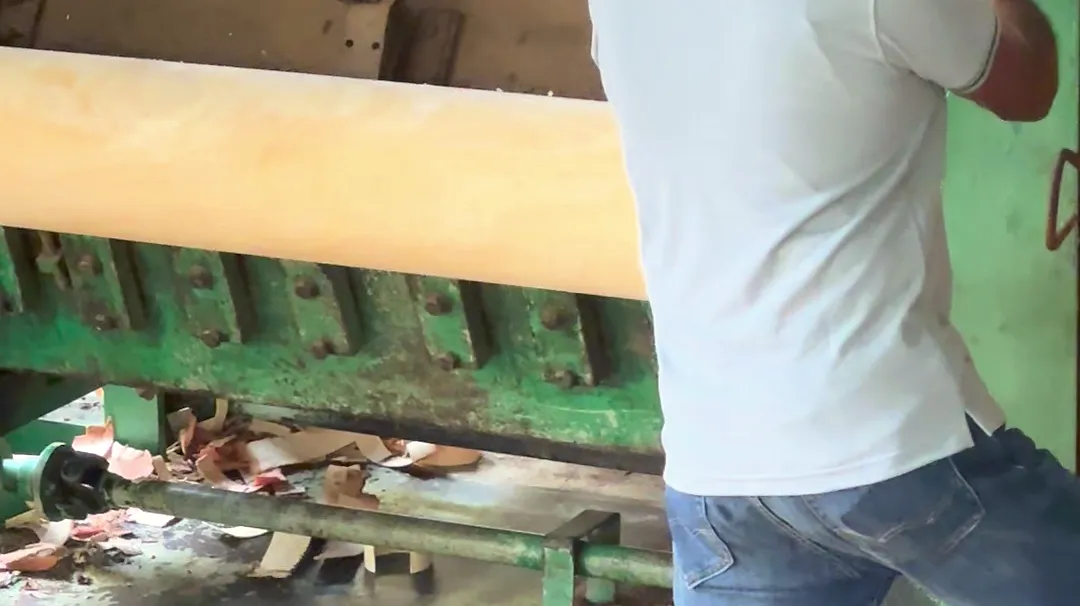
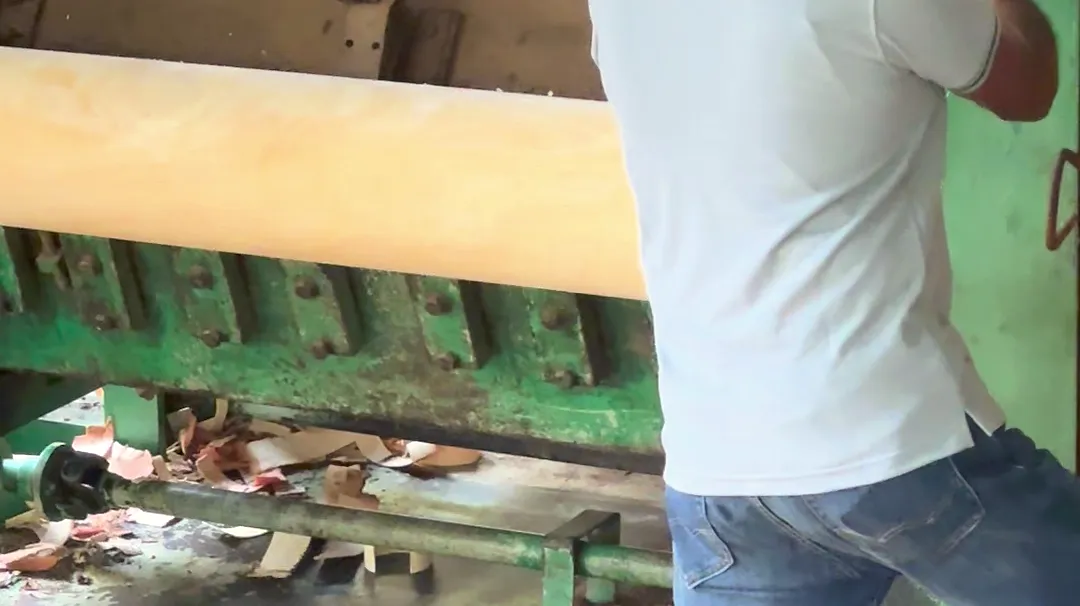
On the rotary lathe, each log turns against a long blade and unrolls into a continuous ribbon of veneer, a bit like unrolling paper towel. The ribbon is then clipped into sheets.
3. Drying to the right moisture
Freshly peeled veneer is wet. It passes through a dryer until it reaches a controlled moisture content. This step matters more than most people realise: veneer that is too wet causes weak glue bonds and warped boards.
4. Grading and patching by hand
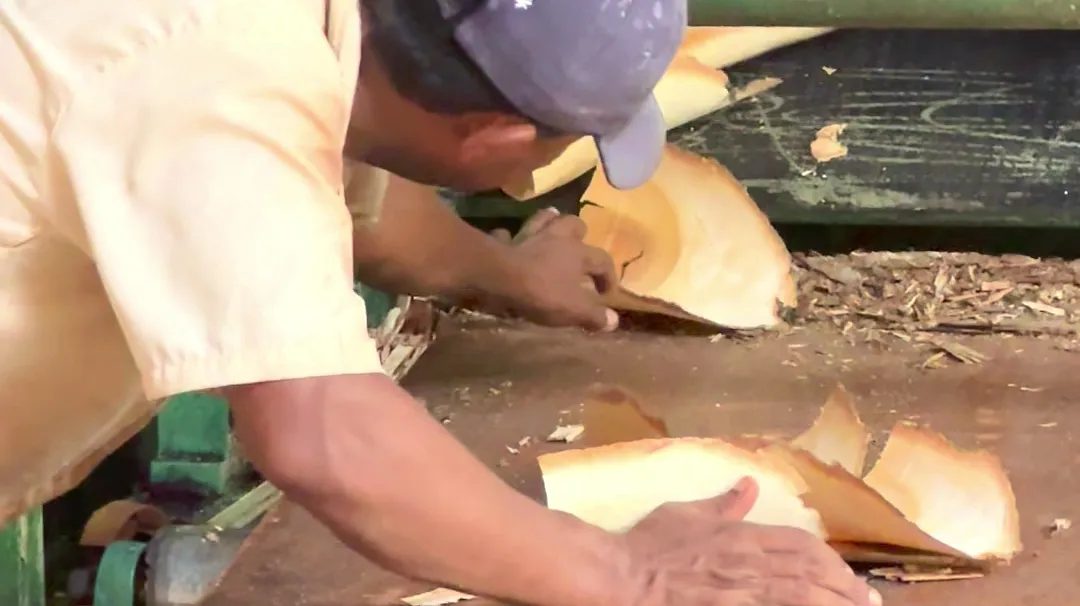
Every veneer is graded. The best sheets become face veneers; others become the core. Skilled hands patch knots and joint splits so only sound sheets go forward.
5. Glue spreading and lay-up
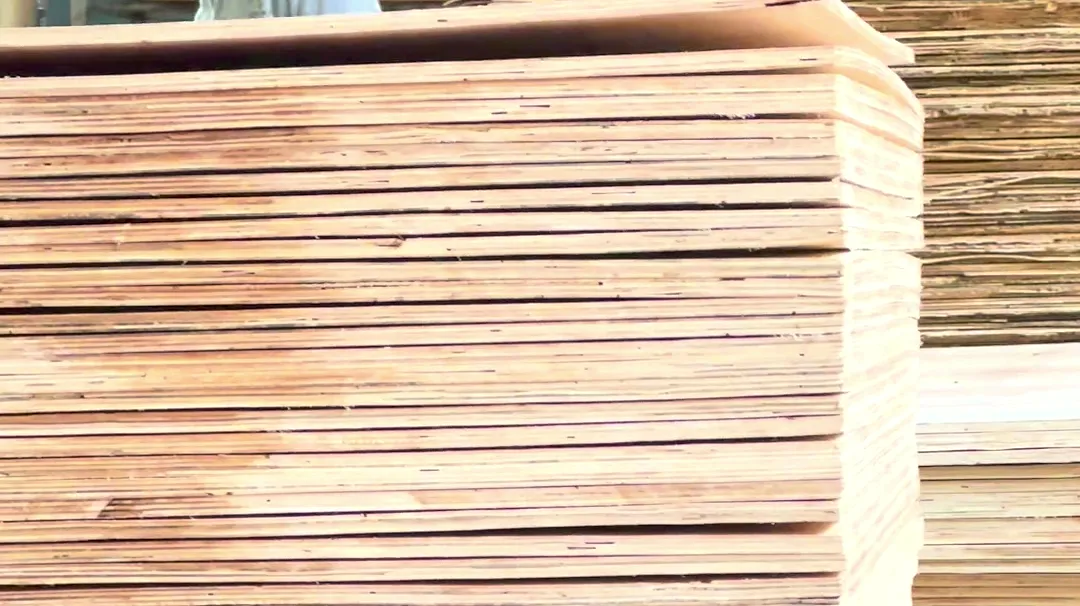
Resin is spread evenly across the core veneers, using the formulation that suits the grade being made. The veneers are then stacked with their grain at right angles to the layer below. This cross-lamination is what gives plywood its strength in both directions and keeps it from splitting.
6. Cold press, then hot press
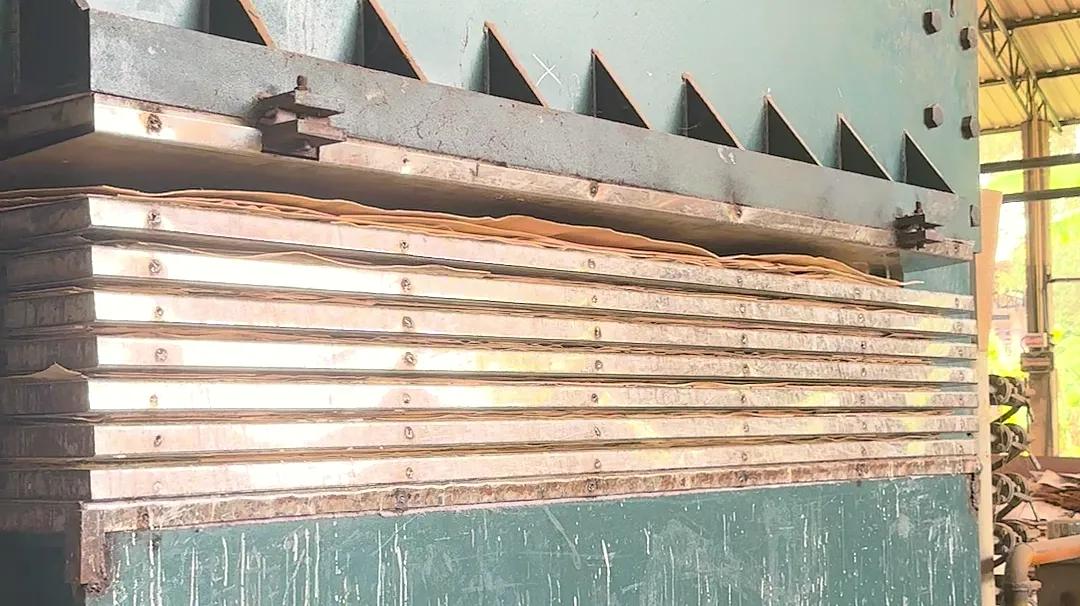
A cold pre-press removes air and settles the stack. Then the boards go into the hot press, where heat and hydraulic pressure cure the resin and permanently bond the plies into a single panel.
7. Trimming, sanding and checking
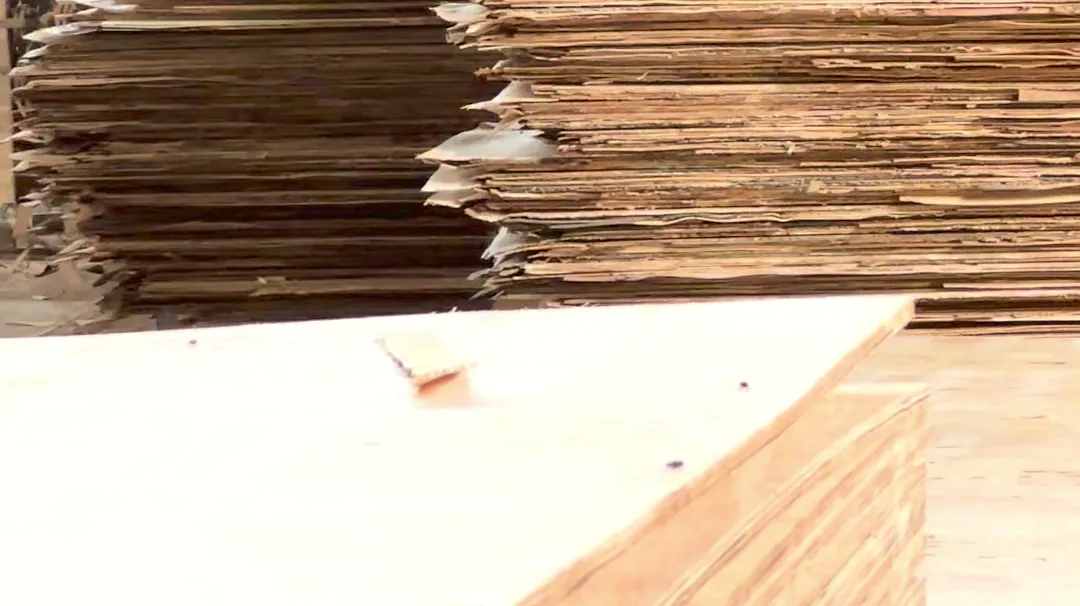
Pressed boards are trimmed square to size and sanded to a calibrated thickness. Some receive an EV face, others leave as non-face plywood. Every board is inspected for bond and surface quality, stamped and stacked for dispatch.
See it for yourself
Every one of these steps is filmed on our process page. Dealers, architects and project teams are welcome to arrange a factory visit. Just get in touch.